By Ishan Sachdeva, , a 6 minute read
How long does it take to build a small business website?
The short version
- Most of the time on a website project goes into words, photos and decisions, not the building.
- A written plan and one person who can say yes keep a project moving.
- Preparing your services, photos and common customer questions before you start saves weeks.
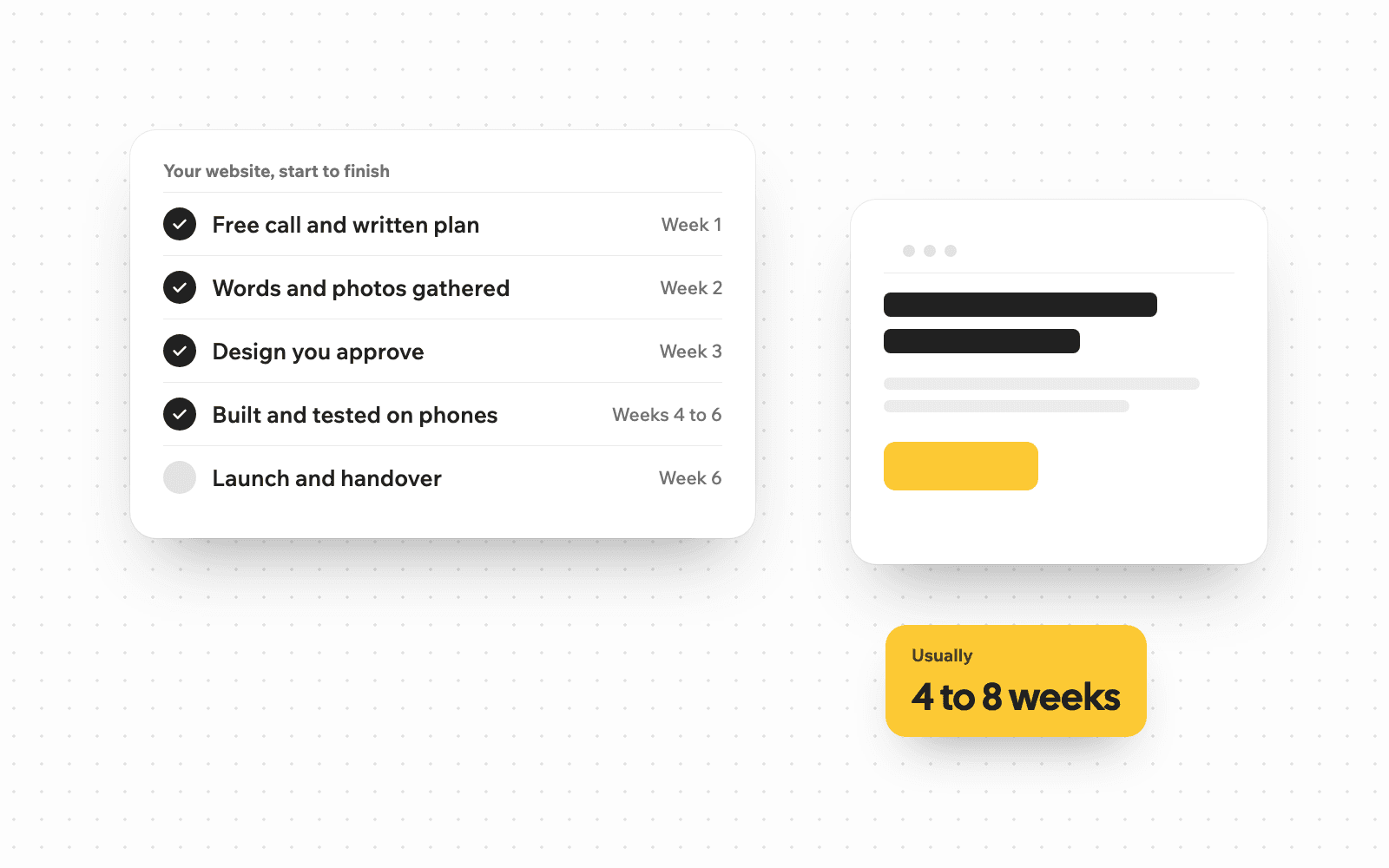
A small business website usually takes about four to eight weeks from the first call to launch. The building itself is rarely what takes longest. Most of the time goes into gathering words and photos, making decisions and giving feedback, so a prepared owner can have a site live much sooner than an unprepared one.
What are the stages of building a website?
Every project is a little different, but most small business websites move through the same five stages. The times below are rough guides for a site of five to fifteen pages, assuming feedback comes back within a few days.
| Stage | What happens | Rough time |
|---|---|---|
| Discovery | A call about your customers, services and goals, then a written plan | A few days to a week |
| Words and structure | The pages are planned and the text is written | One to two weeks |
| Design | You see how the pages will look and ask for changes | One to two weeks |
| Build and test | The site is built, checked on phones and connected to your forms | One to two weeks |
| Launch | The site goes live and is set up to be found on Google | A few days |
Some stages overlap. Design can start on the home page while the service pages are still being written, which is one reason a well-run project often feels shorter than the table suggests.
Why does the first stage matter so much?
The first stage sets the pace for everything after it. On a first call we want to learn who your customers are, what they ask before they book, which services bring in the most work and which areas you cover. That becomes a written plan with a fixed price, so both sides know exactly what is being built.
Skipping this step does not save time. It only moves the questions to the middle of the project, when changing direction is slower and more frustrating for everyone.
What slows a website project down?
Delays almost never come from the building. They come from four places.
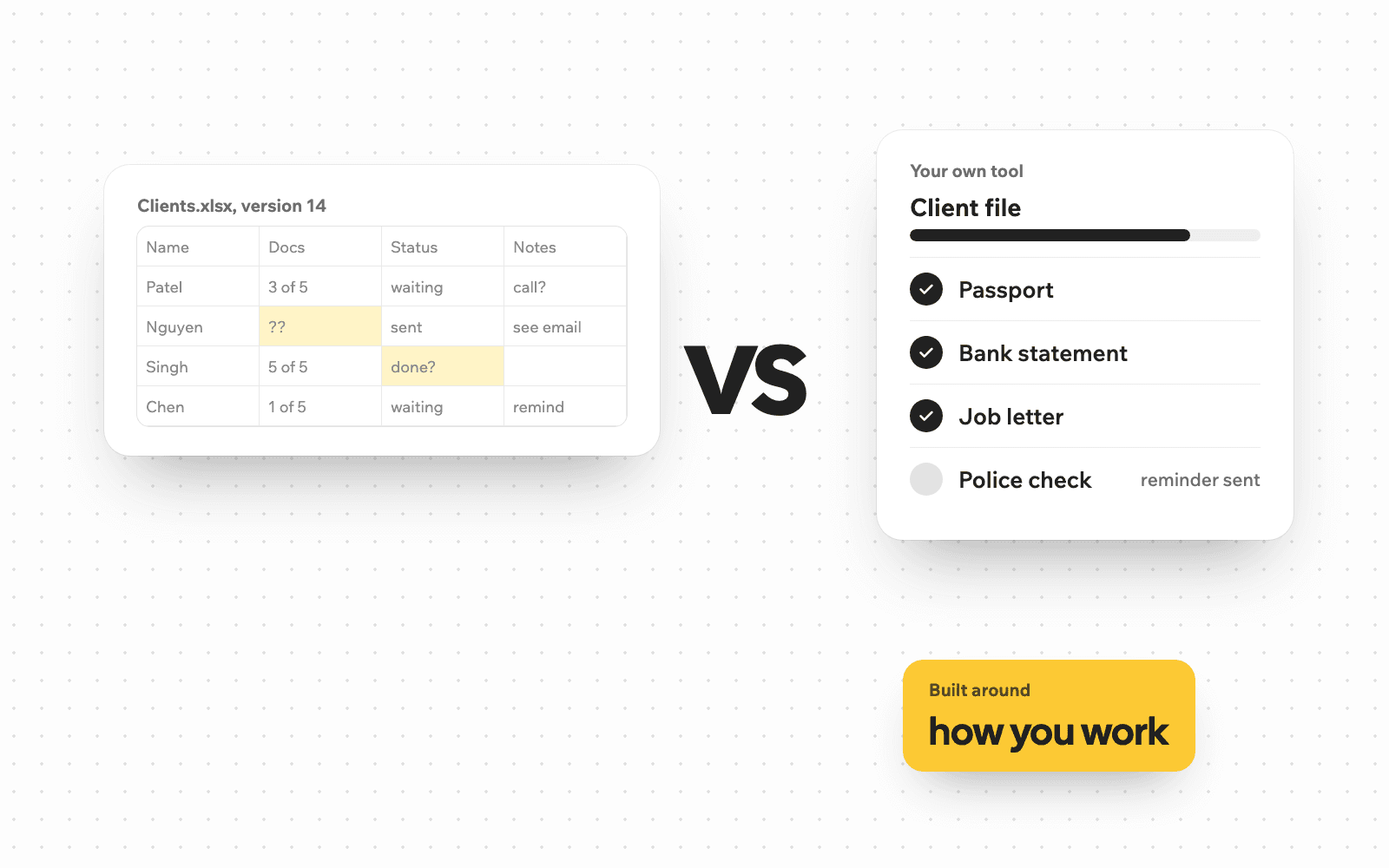
The words. Text is the most common bottleneck. Many owners are told to "send over the content", and the project then waits for weeks while a busy person tries to write ten pages in the evenings. Writing the pages with you, from a conversation, is much faster than waiting for a document.
Decisions. You will need to decide which services go first, whether to show prices and what to call each package. Small choices can stall a project if nobody is sure who gets the final say. When three partners all need to agree on every page, each round of feedback takes longer.
Photos. Real photos of your work, your team and your space sell far better than stock images, and they take time to gather. If you need a photographer, booking one early keeps the design stage from waiting.
Feedback. A round of changes that comes back in two days keeps a project moving. One that comes back in three weeks adds three weeks. Feedback spread across emails, texts and phone calls also takes longer to sort out than one clear list.
Other things can add time too, such as moving an old domain, connecting a booking or payment tool, or adding pages halfway through. None of these are a problem when they are known at the start.
What can I prepare before the project starts?
A little preparation saves more time than anything else. Start with a list of your services, in the order you would like customers to see them, and the towns and neighbourhoods you serve. Then write down the ten questions customers ask you most often, with the answers you usually give. Those answers often become the most useful text on the site.
Gather any photos of your work, your team or your premises that you like, even ones taken on your phone. Find the login details for your domain, or the name of whoever set it up years ago. Pick two or three websites you like and one you do not, with a sentence about why. Finally, decide who will approve the work, and make it one person.
You do not need all of this to start. Even half of it gives a designer enough to write a strong first draft.
Can a website be built in a week?
A very small site can be built quickly when the words, photos and decisions are already in hand. A single page with your services, your area and a way to get in touch is a reasonable first step if you need something live soon.
The risk with a rushed site is that it gets built without the parts that bring in work: a page for each service, clear details about the areas you cover and an enquiry form that actually reaches you. It is usually better to launch a smaller site that is done properly than a larger one that is done in a hurry.
Does a bigger website take much longer?
It takes longer, but not in proportion. A site with twenty pages does not take four times as long as a site with five, because the design and structure are shared. What adds the most time is new kinds of pages, such as an online store, a booking system, a members area or a page that pulls in listings. Each one needs its own planning and testing.
If you serve several cities, such as Surrey and Burnaby, a page for each area adds writing time. It is also some of the most useful writing on the site, because it helps local customers find you.
What does a well-run project look like?
You should always know which stage the project is at and what is needed from you. You should see the words and the design together before anything is built, so there are no surprises at the end. And you should get a fixed price at the start, so a slow week does not turn into a larger bill.
A clear goal helps too. The plan for the website for S3 Mortgages, a Surrey brokerage, was simple to state: help visitors understand their options, estimate a payment and book an appointment from any page. When everyone agrees on a goal like that early, decisions later in the project become much easier.
What happens after launch?
Launch is not the end. In the first few weeks it is normal to adjust wording, add photos and fix small things you only notice once real customers start using the site.
Search results also take time to catch up with a new site, so it can be several weeks before you see it appear for local searches. Nobody can promise a particular position on Google, but a site with clear service and area pages gives you a fair start. You should also be able to make simple changes yourself, such as hours, prices and photos, and know who to call for anything bigger.
How do I keep my project on schedule?
Pick one person to give feedback and make decisions. Reply to questions within a few days. Share what you have, even if it is rough, rather than waiting until it is perfect. And choose a designer who writes the words with you, so the project never sits waiting for text.
You can read more about how we build websites, from the first call to launch day.
Talk it through first
If you are planning a new website and want a realistic timeline for your business, book a free 30-minute call. We will talk about what you need, and afterwards you will get a written plan and a fixed price. Get in touch here, or call 672-514-1903.
Hexio Labs offers websites for businesses in Vancouver, Surrey and the rest of the Lower Mainland.