By Ishan Sachdeva, , a 5 minute read
Do you need an online store, or just a way to book and pay?
The short version
- Many local businesses need a simple way to get paid, not a full online store.
- A full shop makes sense when customers want to browse many products and buy without talking to you.
- If you sell your time, booking with a deposit usually does more for you than a shop would.
Many local businesses do not need a full online store. If you sell a handful of products, a simple page with payment links is often enough, and if you sell your time, a booking page that takes a deposit usually does more for you than a shop would. A full store pays off when you have many products that customers want to browse and buy without talking to you first.
What are my options for taking payments online?
There are three common setups, and most local businesses fit one of them clearly.
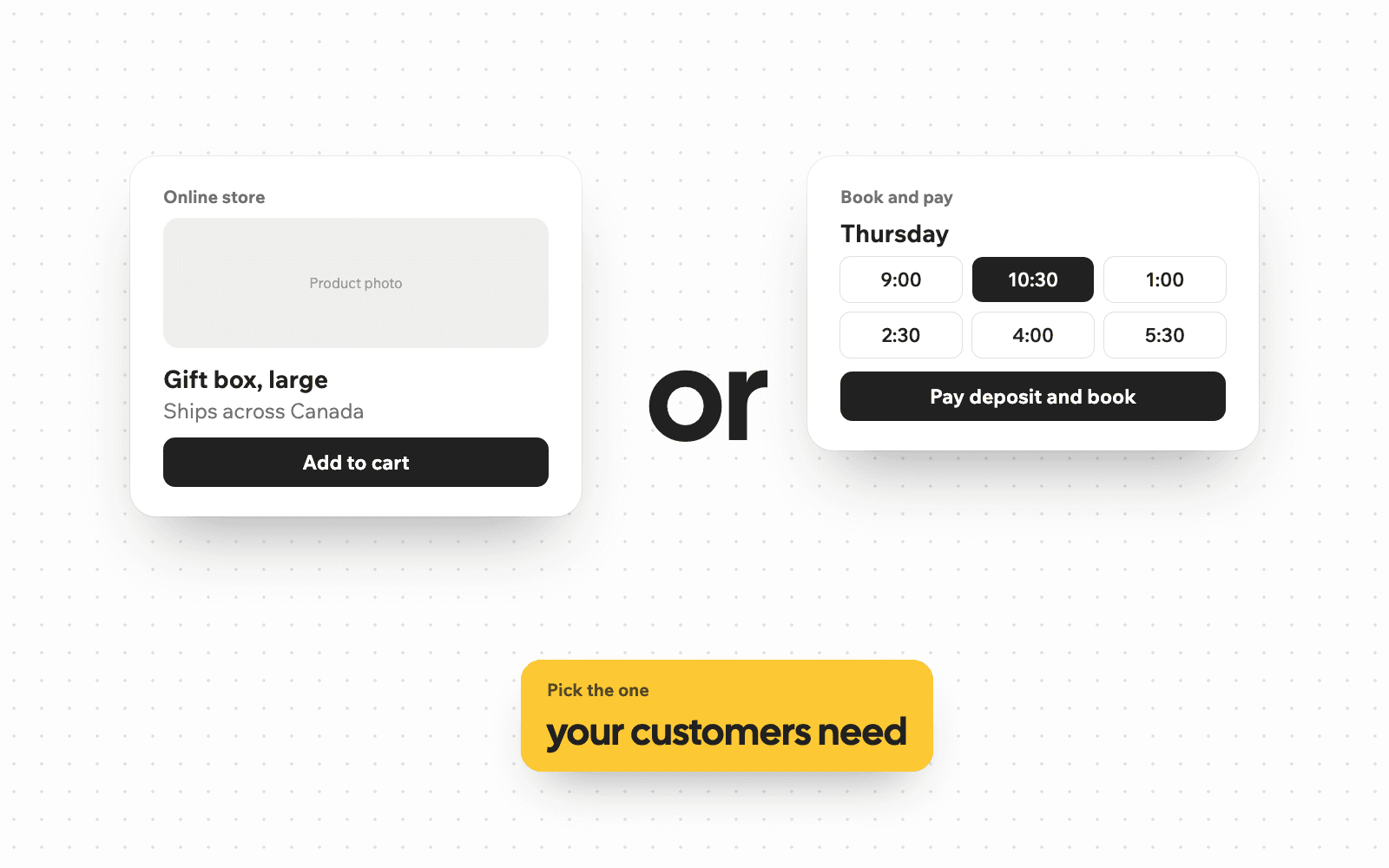
| Option | Best for | What customers do |
|---|---|---|
| A full online store | Many products, shipping or pickup, repeat buyers | Browse, add to a cart and check out |
| A product page with payment links | A few products, gift cards, classes or packages | Read about it and tap a button to pay |
| Booking with a deposit | Appointments, consultations, lessons and rentals | Pick a time and pay a deposit to hold it |
Each one can be set up with everyday tools you may already know, such as Shopify, Square or Stripe. The choice is less about the tool and more about how your customers like to buy.
When do I need a full online store?
A full store is worth it when customers want to look around. You probably need one if you sell more than a small handful of products, especially with sizes, colours or other options. It also fits when customers often buy several things at once, when you ship across BC or Canada or offer local pickup and delivery, and when your stock changes often and needs to stay accurate.
A shop does more than take money. It keeps track of inventory, sends order confirmations, works out shipping and taxes, and reminds people who left something in their cart. It can also send offers to people who have bought before, which matters if repeat customers are a big part of your business. Those features are why it is the right choice for a real catalogue, and why it is more than many small businesses need.
A full store also takes ongoing work. Someone has to add products, update photos, keep prices right and answer questions about orders. If you are not ready for that yet, a simpler setup will serve you better for now.
When is a product page with payment links enough?
If you sell a few things, a well-written page with a "Buy now" button for each one is often all you need. Stripe, Square and Shopify can all create payment links that open a secure checkout without a full shop around them.
This fits you if you sell somewhere between one and a dozen items, such as gift cards, a class pass, a workshop seat, a starter kit or a fixed-price package. It also fits when customers usually know what they want before they arrive and buy one thing at a time, so a cart would only get in the way.
A café selling gift cards, a personal trainer selling a ten-session pack or a bakery taking pre-orders for holiday boxes can all do well this way. It can be live quickly, and you can grow into a full store later if sales justify it.
The page itself still matters. Clear photos, a plain description, what is included, how pickup or delivery works and what happens after payment will do more for your sales than any checkout feature.
When should I take bookings with a deposit instead?
If what you sell is your time, a shop is the wrong shape. Customers do not want to add a haircut to a cart. They want to see when you are free, pick a time and know it is held for them.
Booking with a deposit fits you if you run appointments, consultations, lessons, treatments or rentals. It is especially useful if no-shows and late cancellations cost you money, or if you spend too much of your day texting back and forth to find a time that works. A deposit means the people who book are serious about turning up.
A booking page connected to your calendar lets customers choose an open slot, pay a deposit or the full amount, and get a confirmation and a reminder before the appointment. Square, Stripe and many booking tools can take the deposit, and you set the rules, such as how much it is and what happens if someone cancels late. Write your cancellation policy in plain words beside the booking button, so nobody is surprised.
For an example of booking built into a site, look at our medical aesthetics clinic website concept, where a button to book a consultation is always within reach.
Can I combine more than one?
Yes, and many businesses should combine them. A salon might take bookings with deposits for appointments and sell gift cards with a simple payment link. A garden centre in Langley might run a small online store for pickup orders and take bookings for design consultations.
The aim is to give each type of purchase the simplest path. When customers have to work through a full shop to buy a single gift card, or call to book something they could have booked themselves, you lose sales you never hear about.
Which questions should I ask before deciding?
Start with how many things you sell and how often they change. Then ask whether customers buy one item or several at a time, and whether you are selling products, your time or both. Think about how often no-shows cost you money, and who on your team will keep products, prices and photos up to date. Finally, think about what your customers already use and expect from businesses like yours.
If you answer those honestly, the right setup is usually obvious. When it is not, start with the simpler option. It is far easier to grow a payment link into a store than to shrink a store that nobody uses.
What should any setup include?
Whatever you choose, a few things matter for every local business. Checkout should take seconds on a phone, with cards, Apple Pay and Google Pay. Customers should get a clear confirmation straight away. You should hear about every order or booking without having to go looking. And payments should go into an account in your own name, so the money and the customer records belong to you.
Our online stores service covers full shops, simple payment pages and booking with deposits, all set up and tested with real orders before launch. We work with businesses in Richmond, Langley and across the Lower Mainland.
Not sure which one you need?
Book a free 30-minute call and tell us how you sell today. We will suggest the simplest setup that fits your business, and afterwards you will get a written plan and a fixed price. Get in touch here, or call 672-514-1903.
Hexio Labs offers online stores for businesses in Vancouver, Surrey and the rest of the Lower Mainland.